Crawl Space Vapor Barriers: Are They Necessary in Charlotte, NC?
If you’ve ever looked into protecting your home’s crawl space, you’ve probably come across recommendations for vapor barriers for crawl space areas. But are they really necessary in Charlotte and throughout the Carolinas?
The short answer is yes. North Carolina’s humid climate creates ideal conditions for moisture problems beneath homes. A properly installed vapor barrier in crawl space areas helps reduce excess moisture, protects structural components, and supports a healthier indoor environment.
Here’s what every homeowner should know before installing a vapor barrier.
What Is a Vapor Barrier in a Crawl Space?
Many homeowners ask, what is a vapor barrier in a crawl space?
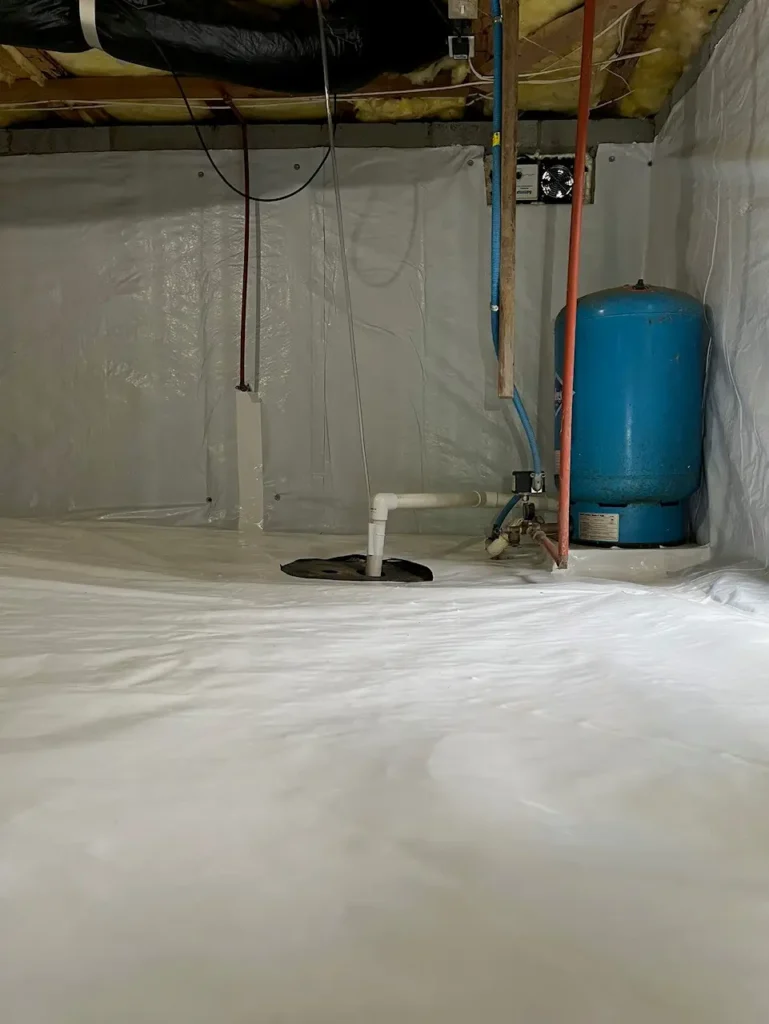
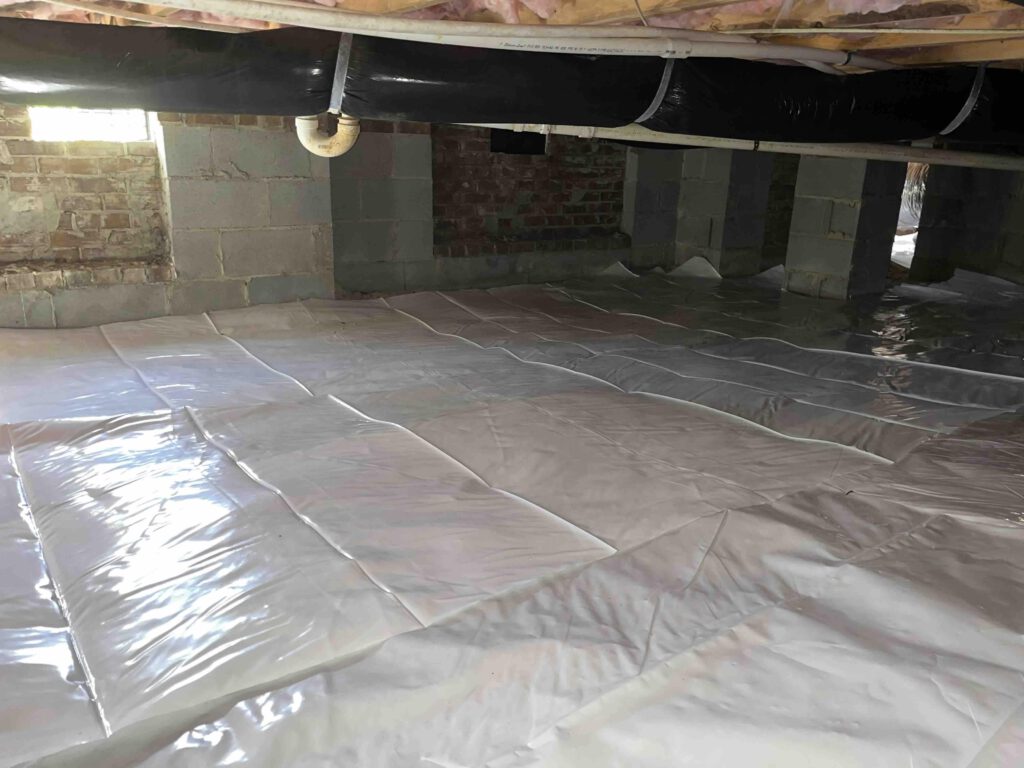
A crawl space vapor barrier is a heavy-duty polyethylene liner installed over the exposed soil in your crawl space. Its primary purpose is to reduce the amount of moisture that evaporates from the ground into the air beneath your home.
Although the term “barrier” suggests complete protection, no material is entirely impermeable. Instead, these systems dramatically slow moisture movement, making it much easier to control humidity levels.
A quality space vapor barrier is typically secured across the ground and carefully sealed around support piers, foundation walls, and other penetrations. Depending on your home’s needs, it may cover only the floor or become part of a larger moisture-control system.
What Does a Vapor Barrier Do?
Many homeowners simply want to know, what does a vapor barrier do?
Its biggest job is controlling ground moisture before it becomes a larger problem.
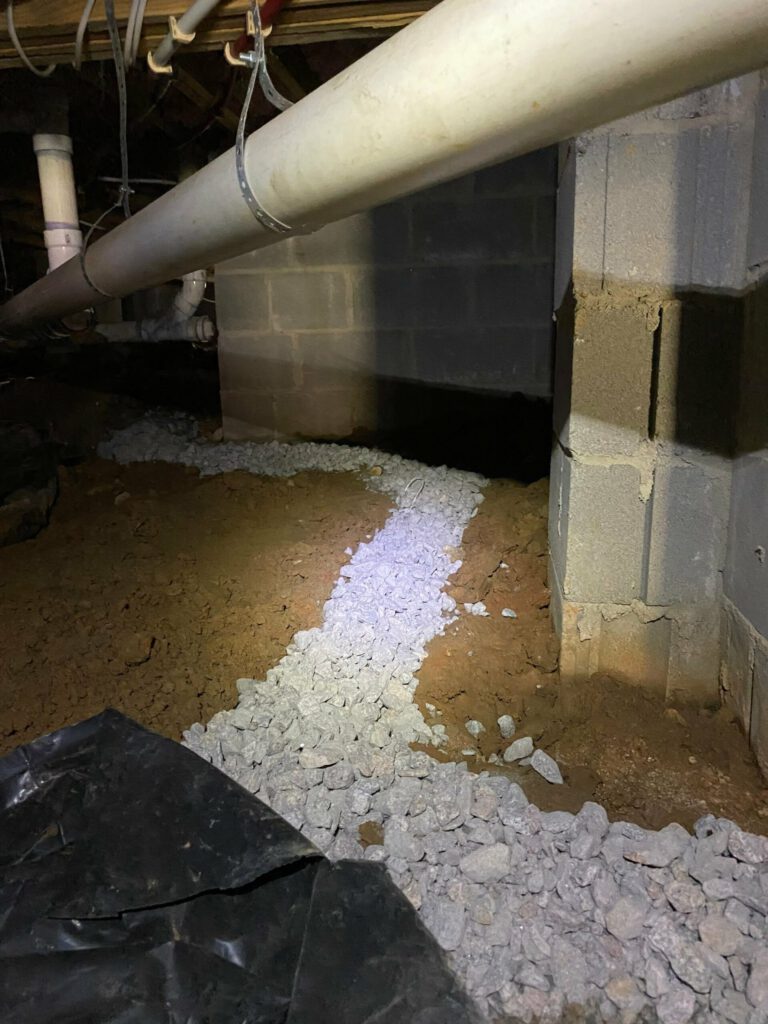
Without protection, moisture naturally evaporates from the soil beneath your home. In North Carolina’s humid environment, that moisture can collect inside the crawl space, raising humidity levels throughout the structure.
Over time, excessive moisture may contribute to:
- Wood rot
- Soft or sagging floor joists
- Increased humidity inside the home
- Mold and mildew growth
- Musty odors
- Rust on metal components
- Conditions that attract termites and other pests
By limiting the amount of moisture entering the crawl space, a vapor barrier helps create a drier environment that protects both your home’s structure and indoor air quality.
Why Charlotte Homes Need Crawl Space Vapor Protection
Charlotte experiences warm summers, regular rainfall, and consistently high humidity for much of the year. Those conditions make moisture management especially important.
When damp soil continually releases moisture into a crawl space, humidity builds beneath the house. Since air naturally moves upward, some of that moisture can enter the living areas above through what’s known as the stack effect.
This means problems below your floors can eventually affect your entire home.
A properly installed crawl space vapor barrier helps interrupt this cycle by reducing the amount of moisture entering the crawl space in the first place.
In fact, North Carolina building code requires vapor retarders over exposed soil in most crawl spaces, making them an essential component of modern home construction.
Vapor Barrier in Crawl Space Pros and Cons
Like any home improvement project, it’s helpful to understand the vapor barrier in crawl space pros and cons before making a decision.
Benefits
A professionally installed vapor barrier offers several advantages:
- Helps control ground moisture
- Reduces the risk of mold and mildew
- Protects wooden framing from excess moisture
- Helps discourage termites and moisture-loving pests
- Can improve indoor air quality
- Supports better energy efficiency when combined with insulation or encapsulation
- Helps preserve your home’s structural integrity
Potential Limitations
A vapor barrier is highly effective, but it’s important to understand what it cannot do.
A vapor barrier alone does not:
- Fix standing water problems
- Repair structural damage
- Eliminate existing mold
- Seal outside air leaks
- Replace drainage improvements
If your crawl space experiences water intrusion after heavy rains, additional waterproofing or drainage solutions may also be necessary.
Installing a Vapor Barrier the Right Way
Many homeowners underestimate how much work goes into installing a vapor barrier correctly.
Professional installation typically includes:
- Inspecting the crawl space for existing moisture damage.
- Removing debris and sharp objects.
- Addressing drainage or standing water issues if necessary.
- Measuring and cutting the liner for complete coverage.
- Overlapping and sealing seams.
- Securing the barrier around foundation piers and walls.
- Performing a final quality inspection.
Proper installation matters because even small gaps can allow moisture to escape into the crawl space.
Experienced crawl space professionals also know how to work around HVAC equipment, plumbing, electrical systems, and structural supports without compromising the barrier’s performance.
Vapor Barrier vs. Crawl Space Encapsulation
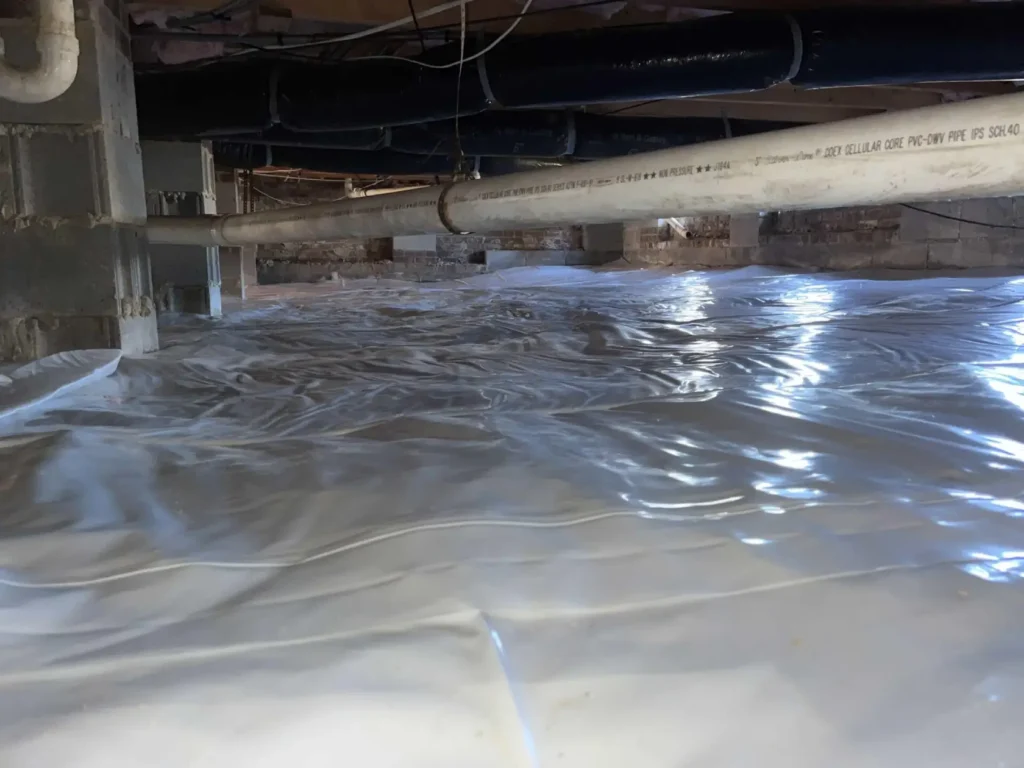
Some homeowners confuse a vapor barrier with a full encapsulation system.
A standard vapor barrier in crawl space areas primarily covers the exposed soil to reduce moisture coming from the ground.
An encapsulated crawl space, on the other hand, is a much more comprehensive solution.
Encapsulation typically includes:
- A thicker vapor barrier across the floor
- Barrier material attached to foundation walls
- Sealed vents
- Air sealing
- Insulation improvements
- Often a dehumidifier for humidity control
Encapsulation creates a controlled environment beneath your home and offers the highest level of moisture protection.
Your crawl space professional can recommend which solution makes the most sense based on your home’s condition.
How Much Does a Crawl Space Vapor Barrier Cost?
Every crawl space is different, so costs vary depending on several factors.
These include:
- Crawl space size
- Height and accessibility
- Existing moisture damage
- Debris removal requirements
- Thickness of the vapor barrier material
- Additional repairs or waterproofing
While installation represents an upfront investment, preventing structural damage, mold remediation, and pest infestations can save homeowners significant money over time.
The best way to determine pricing is through a professional crawl space inspection.
Do I Need a Vapor Barrier in My Crawl Space?
Many homeowners ask, do I need a vapor barrier in my crawl space?
For homes throughout Charlotte and the Carolinas, the answer is almost always yes.
You may especially benefit from a vapor barrier if you notice:
- Musty odors inside your home
- Damp insulation
- High indoor humidity
- Visible condensation beneath the house
- Wood showing signs of moisture damage
- Mold growth
- Pest activity
- Dirt floors without protective covering
Even if your crawl space appears dry today, controlling moisture before problems develop is far less expensive than repairing damage later.
Frequently Asked Questions
What material works best for crawl space vapor barriers?
Heavy-duty polyethylene is the industry standard. It offers excellent durability, resists punctures, and effectively reduces moisture movement from the soil.
Will a vapor barrier make my crawl space airtight?
No. A standard vapor barrier controls moisture coming from the ground but does not completely seal the crawl space. A fully encapsulated crawl space creates a much tighter environment by sealing walls, vents, and other openings.
How often should a crawl space vapor barrier be inspected?
Most professionals recommend inspecting your crawl space at least once each year. Regular inspections help identify tears, shifting materials, water intrusion, or other issues before they become expensive repairs.
Protect Your Charlotte Home from Moisture
Moisture is one of the biggest threats to homes throughout North Carolina, but it can often be controlled with the right crawl space solution. A professionally installed vapor barrier helps reduce ground moisture, discourages mold and mildew, protects structural components, and creates a healthier environment beneath your home.
If you’re considering vapor barriers for crawl space protection or wondering if your home would benefit from an upgraded moisture control system, Falcone Crawl Space can provide a professional crawl space inspection to help determine the best solution for your property’s unique needs.