Do You Need an Interior Basement Drainage System This Winter?
Most homeowners do not start researching an interior basement drainage system until they see water where it should not be. A puddle along the wall. Damp carpet. White residue on the block. A musty smell that shows up every winter.
In North Carolina and South Carolina, winter is when basement drainage problems become obvious. Groundwater levels rise, soil stays saturated, and weak points in the foundation stop holding back water.
Many homeowners first notice leaks after learning why water intrusion in the basement gets worse during winter. Seasonal pressure exposes problems that may have been developing for years.
If you are seeing water this winter, the real question is not just how to get rid of it. The question is whether an interior basement drainage system is the right solution for your home.
What an Interior Basement Drainage System Actually Does
An interior basement drainage system is designed to control groundwater after it reaches the foundation. It does not rely on stopping water outside the home. It manages pressure and flow so water never becomes a problem inside.
A properly designed system:
- Collects water before it enters the basement space
- Relieves hydrostatic pressure under the slab
- Directs water to a sump pump
- Discharges water safely away from the foundation
In areas like Charlotte, Raleigh, and across the Carolinas, where clay soils hold moisture, this approach is often the most reliable long-term option.
An interior basement drainage system is one part of a larger interior basement waterproofing approach designed to control groundwater pressure.
Why Winter Is When You Find Out You Need Drainage
Winter creates the perfect conditions for basement water problems.
During colder months:
- Rainfall drains slower
- Soil stays saturated for longer periods
- Groundwater levels remain high
- Freeze and thaw cycles widen existing cracks
Even homes that stay dry most of the year can develop water issues in winter. That does not mean the problem is new. It means pressure has finally exceeded what the foundation can handle.
An interior basement drainage system works year-round, but winter is when its value becomes clear.
Common Signs You May Need an Interior Basement Drainage System
Not every basement leak requires a full drainage system, but certain signs point strongly in that direction.
Common indicators include:
- Water entering where the wall meets the floor
- Damp or wet basement floors after heavy rain
- Musty odors that return every winter
- Efflorescence or white powder on foundation walls
- Repeated leaks even after sealing cracks
- A sump pump that runs constantly or cannot keep up
If water keeps finding its way back, surface fixes are not addressing the real issue.
The Main Types of Interior Basement Drainage Systems
Not all drainage systems are the same. Design and placement matter.
Perimeter Drain Systems
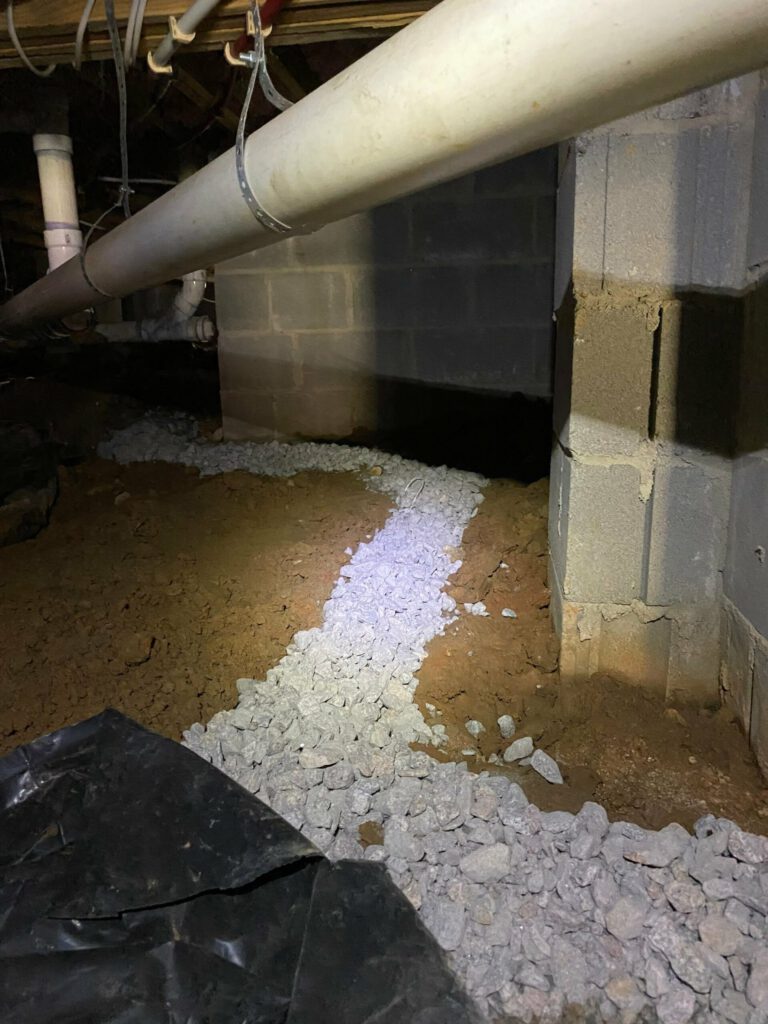
These are installed along the inside edge of the basement, typically at the wall and floor joint.
They work by:
- Capturing groundwater before it enters the space
- Relieving pressure along the foundation perimeter
- Feeding water directly into a sump basin
This is the most common and effective option for persistent water intrusion.
Under-Slab Drainage
In homes with high groundwater or recurring floor seepage, drainage may need to extend under the slab.
This approach:
- Intercepts rising groundwater
- Reduces pressure beneath the basement floor
- Prevents water from pushing up through cracks
Under-slab drainage is especially useful in older Charlotte area homes with minimal original drainage.
Sump Pump Integration
An interior basement drainage system is only as good as the sump pump it drains into.
A proper setup includes:
- A sump basin deep enough to handle volume
- A pump sized for local groundwater conditions
- A discharge line that moves water well away from the home
- Backup power for winter storms
Without a reliable sump pump, drainage systems cannot do their job.
What Interior Drainage Does Not Fix
Interior drainage manages water. It does not correct structural problems.
Drainage alone will not fix:
- Bowing foundation walls
- Cracks caused by structural movement
- Settling footings
- Sagging floors above the basement
In fact, installing drainage without addressing structure can sometimes make movement more obvious once pressure is relieved.
When drainage alone is not enough, foundation repair or structural repair may be required to stop water at the source.
That is why inspection matters.
What an Interior Basement Drainage System Costs
Cost depends on the size of the basement, the amount of water, and whether structural repairs are needed.
Factors that affect price include:
- Linear footage of drainage required
- Depth of the slab
- Sump pump type and backup options
- Accessibility of the basement
- Condition of the foundation walls and footings
In the Carolinas, interior basement drainage systems typically cost less than full exterior excavation and are far more practical in winter.
The key is making sure the system is designed for your home, not installed from a template.
What Falcone Looks for During an Inspection
At Falcone Crawl Space, we do not start with a product. We start with pressure and structure.
During an inspection, we look at:
- Where water is entering
- How groundwater is moving under the home
- Soil conditions around the foundation
- Signs of wall or footing movement
- Existing drainage and sump performance
- Whether structural repairs are needed first
Sometimes drainage alone solves the problem. Other times, structural reinforcement or foundation lifting is required before drainage will work long-term.
That distinction matters.
Why Many Drainage Systems Fail
Most failed systems we see have one thing in common. They were installed without understanding the forces involved.
Common failure points include:
- Drains placed too shallow
- Incomplete perimeter coverage
- Undersized sump pumps
- Discharge lines dumping water too close to the foundation
- Ignoring structural movement
An interior basement drainage system should reduce pressure, not just collect water.
Interior Basement Drainage for Charlotte Area Homes
Homes throughout Charlotte and surrounding areas face similar challenges:
- Clay-heavy soils
- Aging foundations
- High seasonal groundwater
- Settled grading over decades
Interior basement drainage systems work well here because they address groundwater where it actually causes problems. They also remain serviceable and effective during winter when exterior solutions struggle.
When to Schedule an Inspection
If you are seeing water now, winter is not the time to wait.
You should schedule an inspection if:
- Water appears after every heavy rain
- Your basement only leaks in winter
- A previous fix did not hold
- You are planning to finish the basement
- You want answers before the problem gets worse
Early evaluation often means simpler, less expensive repairs.
Talk to a Company That Handles Drainage and Structure
An interior basement drainage system can be the right solution, but only when it is designed around how your home actually behaves under pressure.
Falcone Crawl Space serves Charlotte and communities across North Carolina and South Carolina. We install interior drainage systems and sump pumps and handle the structural repairs that many waterproofing companies cannot.
Falcone designs and installs interior drainage systems as part of a complete basement waterproofing solution that works year round.
If you are dealing with basement water this winter, contact us. We offer same-week assessments because water problems do not wait for better weather.