5 Signs of a Sinking Foundation & What Homeowners Can Do About It
TL;DR: A sinking foundation doesn’t happen overnight, and the warning signs often show up inside your home long before you notice anything wrong outside. Cracks in walls, sticking doors, uneven floors, and gaps around windows are all signals that your foundation may be settling unevenly. Catching these signs early is the difference between a manageable repair and a major structural project.
- Foundation settling is normal, but uneven or excessive sinking is not
- Warning signs typically appear gradually over months or years
- North Carolina’s clay soil is especially prone to causing foundation movement
- Professional repair options can stabilize and even lift a sinking foundation
- Early intervention costs significantly less than waiting until the damage spreads
Every home settles to some degree after construction. That’s normal. What’s not normal is when one section of the foundation sinks faster or deeper than the rest, creating uneven stress across the entire structure.
If you’ve been wondering how to tell if your house foundation is sinking, the answer is usually right in front of you. Here are five signs to watch for and what you can do if you spot them.
1. Cracks in Interior Walls and Ceilings
Small hairline cracks around door frames and window corners are common in newer homes as they settle. But when those cracks start growing, multiplying, or running diagonally across drywall, that’s one of the clearest sinking foundation signs you can see from inside your home.
Diagonal cracks that start at the corner of a door or window frame and angle upward toward the ceiling are especially telling. They indicate that one part of the foundation has dropped relative to another, putting shear stress on the wall framing above. Horizontal cracks in basement or crawl space walls suggest lateral pressure from soil pushing inward, which often accompanies settling.
If your cracks are wider than a quarter inch or you can see daylight through them, the movement is significant enough to warrant a professional evaluation.
2. Doors and Windows That Stick or Won’t Close
When your foundation shifts, the door and window frames shift with it. A door that used to close smoothly and now drags against the frame, or a window that suddenly won’t lock because the latch no longer lines up, are common signs your foundation is sinking unevenly.
This happens because the frames are no longer square. As the foundation drops on one side, the rectangular openings in your walls become slightly parallelogram-shaped, which is enough to throw off the fit of doors and windows, even though the change is invisible to the naked eye. If multiple doors or windows in your home are sticking at the same time, the problem is structural, not cosmetic.
3. Uneven or Sloping Floors
One of the most noticeable signs that your house is sinking is a floor that slopes or feels uneven when you walk across it. You might notice a marble rolling on its own, furniture leaning slightly, or a general sense that one side of the room sits lower than the other.
Uneven floors happen when the support structure beneath the floor, whether it’s beams, joists, or the foundation itself, has shifted or settled at different rates. In crawl space homes, this often traces back to failing support posts or a beam that’s lost contact with its footings. On slab foundations, it can indicate void formation beneath the concrete where soil has washed away or compacted unevenly.
4. Gaps Between Walls and the Floor or Ceiling
When a foundation sinks, the structure above it doesn’t always move uniformly. This creates visible gaps where walls pull away from the ceiling, separate from the floor, or detach from adjacent walls at the corners. You might also notice gaps forming around exterior trim, siding, or where a porch or chimney meets the main structure.
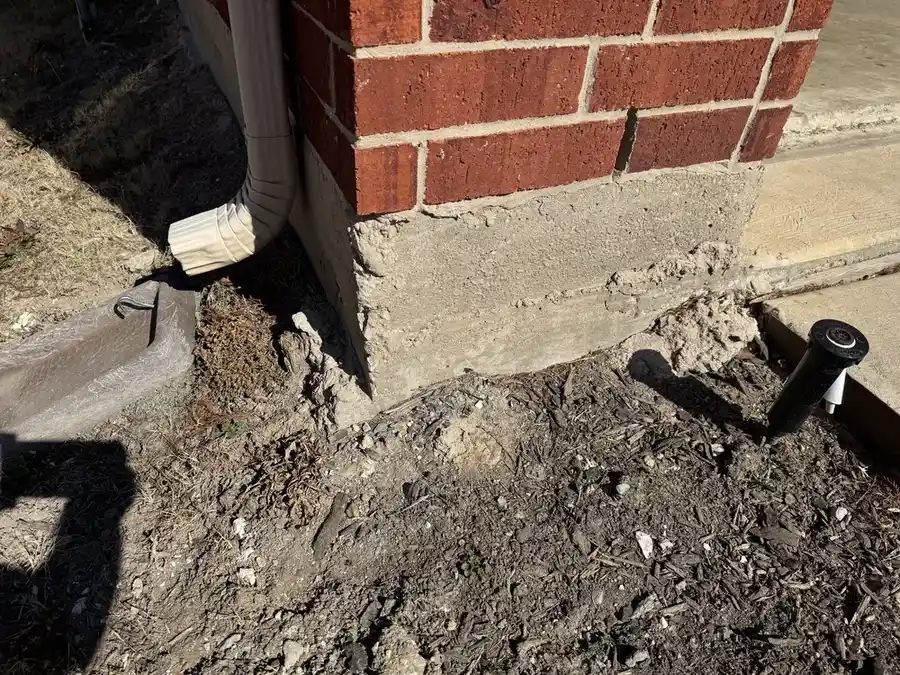
These separations indicate that different sections of the home are moving independently, which means the foundation beneath them is no longer providing uniform support. Even small gaps that appear to be cosmetic can signal a much larger structural issue developing below.
5. Exterior Cracks in the Foundation or Brickwork
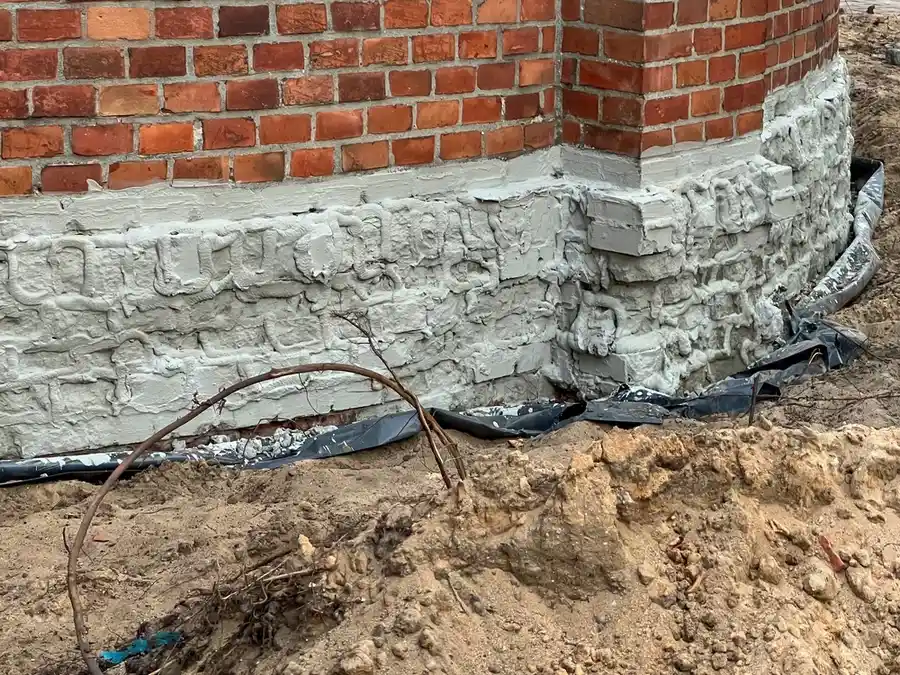
Walk around the outside of your home and look closely at the foundation walls and any brick or stone veneer. Stair-step cracks in brickwork that follow the mortar joints are one of the most recognizable signs of foundation movement. Vertical cracks in poured concrete foundations, especially those that are wider at the top than the bottom, indicate one side of the wall is dropping.
A sinking foundation puts stress on every rigid material attached to it. Brick, stone, and concrete can’t flex the way wood framing can, so they crack instead. If you’re seeing exterior cracks that correspond with interior symptoms like sticking doors or sloping floors, the evidence is pointing strongly toward a foundation that needs attention.
What You Can Do About It
If you’ve identified any combination of these signs, the most important step is getting a professional evaluation before the problem gets worse. Foundation issues don’t stabilize on their own. They progress. Soil continues to shift, water continues to erode, and the structural damage compounds with every season that passes.
Professional repair options for a sinking foundation include:
- Helical piers: Steel shafts driven into stable soil beneath the foundation to lift and stabilize the structure permanently
- Push piers: Hydraulic piers driven to load-bearing strata to support and level the foundation
- Crawl space jacks: Steel support posts installed beneath beams and joists to lift sagging floors and restore structural integrity
- Beam repair or replacement: Addressing failed support beams that have contributed to the settling
Falcone Crawlspace specializes in identifying the root cause of foundation movement and implementing the right repair for your specific situation. Every home is different, and the solution that works for one property may not be the right fit for another. A thorough inspection of your crawl space and foundation gives you a clear diagnosis and a repair plan tailored to what your home actually needs, not a one-size-fits-all approach.
FAQs
Is a sinking foundation dangerous?
Yes. A sinking foundation compromises the structural integrity of your entire home. Over time, it can cause walls to crack, floors to become unsafe, plumbing to break, and the overall structure to become unstable. The longer it goes unaddressed, the more dangerous and expensive the problem becomes.
Can foundation issues get worse over time?
Absolutely. Foundation problems are progressive by nature. The soil conditions that caused the initial settling don’t improve on their own, and the structural stress created by uneven movement continues to spread through the framing, walls, and floors. What starts as a small crack today can become a major structural failure in a few years if it’s left alone.
How much does it cost to repair a sinking foundation?
Cost varies based on the severity of the settling, the repair method required, the size of the affected area, and the accessibility of the foundation. Minor repairs involving a few support jacks may cost a few thousand dollars, while extensive pier installations or beam replacements can range into the tens of thousands. The only way to get an accurate estimate is through a professional inspection of your specific home.
Final Thoughts
A sinking foundation sends clear signals long before the damage becomes severe. Cracks, sticking doors, sloping floors, gaps in walls, and exterior fractures are your home telling you something is wrong beneath it. Paying attention to those signals and acting on them early is the smartest financial decision you can make as a homeowner. The repairs are simpler, the costs are lower, and the long-term outcome is significantly better when you catch the problem before it spreads.
Schedule a professional inspection to better determine your foundation repair needs.